Image courtesy of Present Diabetes
By Russ Ward (@russcward)
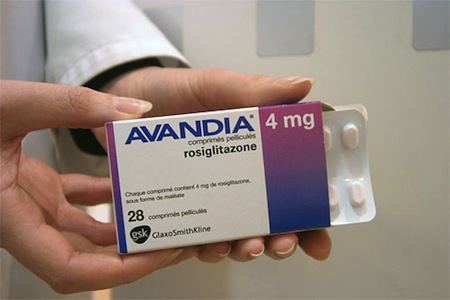
Over the last couple of weeks, if you havent heard people talking about Avandia, GlaxoSmithKlines diabetes drug, you must have been on that mythical desert island that people always talk about.
The FDA convened a hearing to discuss the drug – and specifically, to discuss the heart attacks that patients who were taking it kept experiencing. After the discussion, the committees decision was to recommend keeping the drug on the market, but with the addition of a host of rigorous restrictions to its prescription.
The hearings themselves were very interesting, but just as interesting was watching how different media outlets handled it and reacted to it.
Just in the one week surrounding the hearing, it was possible to see a fascinating cross-section of media approaches, as the hearing drew Twitterers and bloggers attention, as well as that of patient communities, traditional journalists, and competing advertisers. In this post, well take a short look at a cross-section of that news.
Well start with the most time-sensitive – Twitterers. There were several journalists livetweeting the events from the hearing itself – in particular, Forbes Matt Herper (@matthewherper), NPRs Scott Hensley (@scotthensley), TheHeart.orgs Shelley Wood (@theheartorg) and CardioBriefs Larry Husten (@cardiobrief).
All of these journalists have many years not only covering healthcare, but specifically covering cardiology, and so their familiarity with the issues that that drug was facing, and with which the committee was wrestling, made them particularly well able to livetweet the most relevant quotes as they happened, from “Weve seen enough ambiguity to last a lifetime to “This drug may not be for everybody, but that doesnt mean its not for anybody.
Tweets of quotes as soon as they were out of a committee members mouth, along with counts of each vote as soon as the members cast it – these were details that only live journalists within the room of the meeting itself could provide. Even participating by webcast would have lost some of the commentary and tone palpable in the room itself.
In addition, other top pharma Twitterers were covering, retweeting and posting links to coverage, among them Pharma Marketing News John Mack (@pharmaguy), as well as @fiercepharma and – not surprisingly – a tweetstream called @avandialawsuits.
Bloggers were in hot pursuit of the live Twitter coverage, with coverage like Elsevier Global Medical News (@aliciaault) riffing on “A Few Good Men with “The Truth About Avandia? You Cant Handle the Truth. (Many of the previously-mentioned reporters, also, bylined coverage in blogs before or in addition to filing their stories.)
Because the diabetes community is so large and deeply involved in their care, the concept of communities took a large role in the communication of this. dLife, the premier diabetes community, was buzzing with news, questions, rumors and responses…Heres a sample.
And of course, the traditional media did not hesitate to cover the news, from USA Todays Rita Rubin (@ritarubin) and her coverage, to @matthewherpers “Death of Avandia on the Forbes blog, and Deborah Kotzs (@debkotz2) US News story on “what now for Avandia.
On a traditional paid media front, the competition wasted no time. The morning after, Takeda launched ads that touted their drug, Actos, and its differences from Avandia. This action is almost exactly the same – down to the wording of the ads – that they undertook three years prior after a similar situation with Avandia.
Lots of news, lots of people talking. Whats it all mean for you?
Well, the next time theres a competitive event in pharma, do a quick overview like this. Keep abreast of the news in the industry, of course – but more than that, watch the media. See whos covering it, and how. See what the different time frames are. See whos focusing on which angles. It can tell you a very great deal about who gets their news from whom and, therefore, which people really are your “key opinion leaders. Know whose voices are heard and repeated and whose opinions matter most.